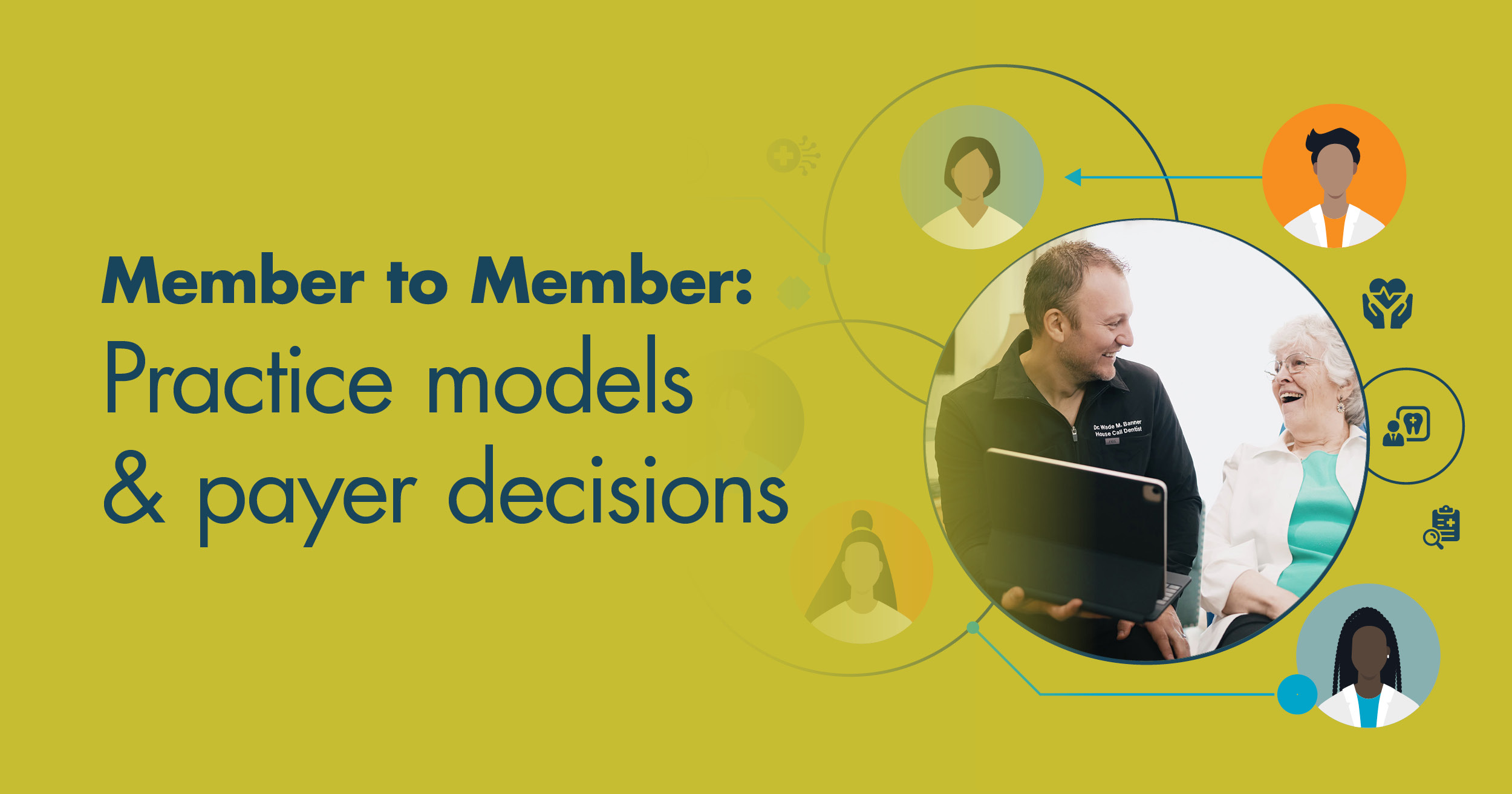
Offering house call dentistry to primarily serve patients with special needs is not a common path to practice ownership for dentists, but that is exactly what Wade Banner, DDS, did.
Dr. Banner’s path began when he was still a student at Western University of Health Sciences, College of Dental Medicine in Pomona, California. As part of his training, he helped treat patients with special needs at a regional care center. After his supervising dentist retired and Banner graduated, the center asked him to stay on and continue providing house call dentistry.
“I determined that having a portable practice for house calls or facility patients would be easier and provide the flexibility to offer a wide array of services in different environments,” Banner said.
Funding and building the start-up: Lessons learned
Building a patient base and making a portable dental practice a viable financial option was the hard part initially. To help fund his start-up, Banner worked as an associate dentist at a couple of private practices and served as adjunct clinical faculty with Western University of Health Sciences, College of Dental Medicine.
When building any type of dental practice from the ground up, growing a patient base can be difficult, but identifying prospective patients with special needs, including seniors who require care in a facility or home setting added a more complex layer. He called the start-up a hard lesson and encourages other dentists who are considering this path to spend more time developing the business before launching, particularly focusing on marketing and partnership development.
Banner opened In Motion Dentists in 2014, believing he and the practice were ready.
“In hindsight, I would have added more cushions for the start-up phase because my initial business plan was a bit optimistic on patient volume and revenue ramp-up,” Banner acknowledged. “Finding consistent referral sources and building trust with facility representatives was challenging.”
Managing logistics for house calls was also more complex than he expected with scheduling, medical consultations and managing patient co-morbidities.
Banner suggests that others who are on this path, especially recent dental school graduates, have a solid business plan with at least six months of expenses in savings and that they start networking early with local agencies, assisted living facilities and community organizations. “Also be ready to wear a lot of hats as it is more than just clinical work,” he said.
Nevertheless, Banner said he would do it all again.
“It’s fun! You get to meet grateful patients in a different environment every day.”
Brick-and-mortar practice was custom built for patients with special needs
In August 2021, after seven years of running his portable practice, Banner went on to open a brick-and-mortar office in part because of the high need in the region.
But even with the brick-and-mortar, Banner didn’t take the traditional path. Instead, he built it from scratch to serve more patients with special needs. A grant from one of the health centers covered about one-third of the start-up costs.
Patients with special needs include people with intellectual or developmental disabilities, physical disabilities and cognitive declines such as dementia and Alzheimer’s who are unable to receive dental procedures in traditional dental offices due to the complexity of the care needed. Occasionally, patients require sedation for their safety and that of the dental team.
Patients with special needs comprise approximately 70% of the patient caseload at the brick-and-mortar, Elevated Dentistry. The portable practice serves Los Angeles, San Bernardino, Riverside and San Diego counties and has a 95% special-needs caseload, including patients with atypical conditions like agoraphobia.
Dentists treating patients with atypical or special needs tend to see fewer patients per day than a typical general practice because of the patients’ complex oral health care needs. For example, clinicians with In Motion Dentists see just four to six patients a day in the portable practice.
‘I need to be a Medi-Cal provider’: Meeting the community’s needs
At Elevated Dentistry, about 50% of Banner’s patients are on Medi-Cal Dental, and the rest have an in-network PPO plan or pay cash.
At In Motion Dentists, which now operates three portable units and employs a hygienist, reimbursement comes from dental plans, cash pay and Medi-Cal.
“Ninety-five percent of the regional center’s clientele has Medi-Cal, so to continue meeting this population’s need for care, I need to be a Medi-Cal provider,” Banner said.
He described a couple of reimbursement challenges early on with the program, particularly with the behavior management fee, but said he worked with the Department of Health Care Services on proper and thorough documentation to ensure each practice receives the reimbursements owed for their services.
“Downgrading of scaling and root planing is pretty common for Medi-Cal and, to a lesser extent, commercial plans,” Banner said. “Paying close attention to documentation, especially with images, is key to receiving proper payment.”
Banner also called tariffs and rising costs a concern. “Costs skyrocketed for dentists during the pandemic,” he said. “Higher reimbursement across the board, including PPO plans adjusting annual maximums, would be helpful.”
Banner applauds ‘straightforward’ Medi-Cal billing, but rates concern him
Banner touts the upsides to Medi-Cal, including being able to serve a wider population of patients and their families. “The billing is straightforward. PPO billing is harder.” He also acknowledged that provider credentialing has become more streamlined and makes it easier to enroll as a Medi-Cal Dental provider.
However, with the 2026-27 state budget proposal calling for nearly $1 billion in cuts to Medi-Cal Dental, Banner’s greatest concern is how the cuts will reduce access to care for patients, especially those with special needs. The cuts are slated to take effect July 1, and he is already taking steps because the cuts could require him to renegotiate with regional centers to avoid reducing his Medi-Cal patient caseload.
He’s also considering negotiating rates with Medi-Cal managed care plans for Los Angeles County brick-and-mortar practices since the plans offer fee schedules rather than capitation.
Banner has seen firsthand the devastating effects of untreated dental disease.
“I’m working with the regional center and local partners, and I submitted Save Our Dental Care coalition letters to legislators,” he said. said. “As lawmakers consider these cuts, I will stress that seniors, disabled persons and children are very vulnerable and that maintaining dental care is vital to their overall health.”
Banner is hopeful that advocacy from the coalition, stakeholders and patients will stop the planned Medi-Cal cuts because he would like to encourage his peers to consider how Medi-Cal dental participation can build their patient base.
Medi-Cal serves more than one-third of California’s population and nearly half of all children in the state. Additionally, new dental office visits by Medi-Cal patients are up by 37% according to the state’s most recent data, creating stronger demand for enrolled providers.
A ‘more rewarding way to provide dental care’
Banner calls the services he and his team provide a “more rewarding way to provide dental care” and is pleased when family members of patients with special needs become patients of the practice. That happens frequently, he says.
“I have a dedicated team who begin and end their day with a sense of fulfillment. We provide the same experience and quality of care regardless of payer type, and this brings joy to the patients and the team,” he adds with a smile.
CDA’s member-only resources support diverse practice models
CDA members have access to expert analysts and exclusive resources to support their preferred way to practice dentistry. Here are just a few:
- Starting a Practice Toolkit (includes resources on buying or building a practice either as a solo dentist or as part of a group)
- Medi-Cal Dental Program Handbook
- CDA’s Dental Plan Action Center
Other resources:
- Alternative Pathways in Dentistry (CDA Journal collection, May 2024)
- Save Our Dental Care coalition (organized by CDA to stop Medi-Cal cuts)
- New Medi-Cal Provider Checklist (DHCS)